Category: books

  • My Year of Rest & Relaxation, Ottessa Moshfegh

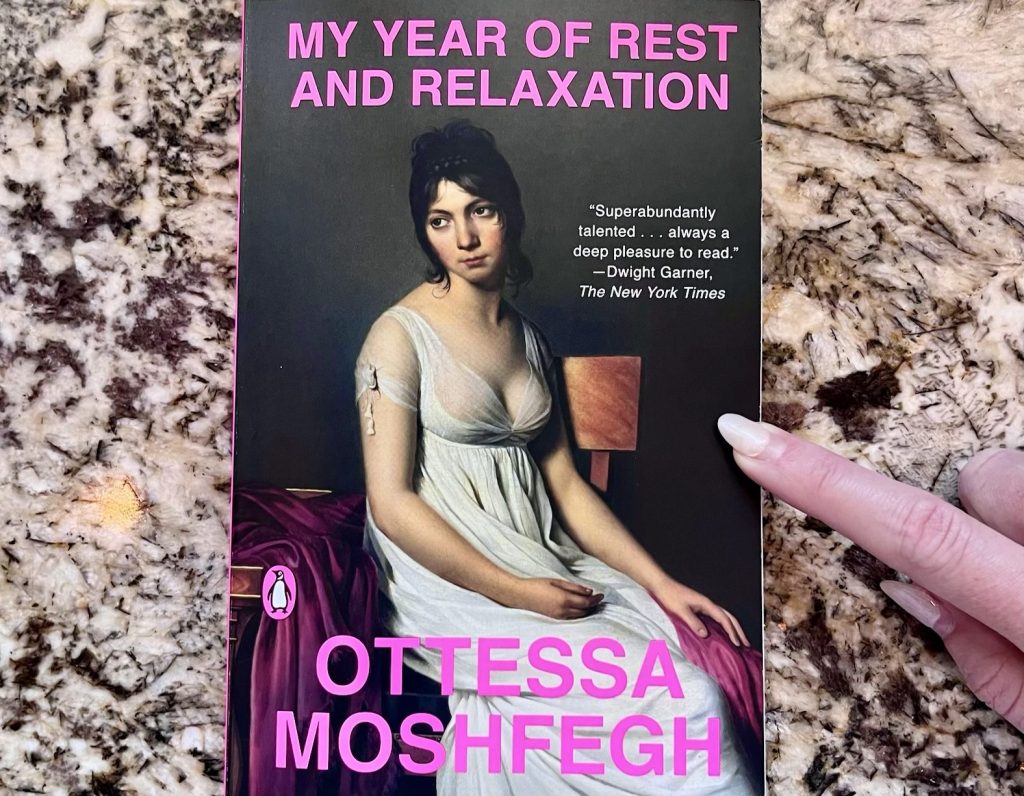
    My Year of Rest & Relaxation, Ottessa Moshfegh

    On one hand, I know that this was a well-written book and an interesting exploration of mental health and grief, and that I read it very quickly. On the other hand, I really did not enjoy the way reading this book made me feel: concerned, disturbed, and generally freaked out. The narrator is a woman in her mid/late 20s whose parents died when she was in college. She has no family, a toxic on-again-off-again relationship with a man who seems objectively awful, and a paradoxical best friend who she seems to hate. She spirals deep into self-medicating (facilitated by a horrifyingly unaware psychologist) and is taking an insane cocktail of drugs like Ativan, Ambien, etc.

    I feel like the whole time I was reading the book, I was mad at the narrator or worried about her, or both at the same time. For example, she was so consistently mean to her only friend, even though that person consistently showed up and checked on her, it made me crazy! And yes, that meanness seemed to be driven by her own internal sadness and low self-esteem. I also felt so upset that there was no one in the narrator’s life to meaningfully help her. The best friend, despite checking on her, seemed to fail to recognize the depths of the narrator’s situation – or failed to act on it.

    So, My Year of Rest & Relaxation was a good book, I guess – both thought-provoking and infuriating.

  • The Island of Sea Women, Lisa See

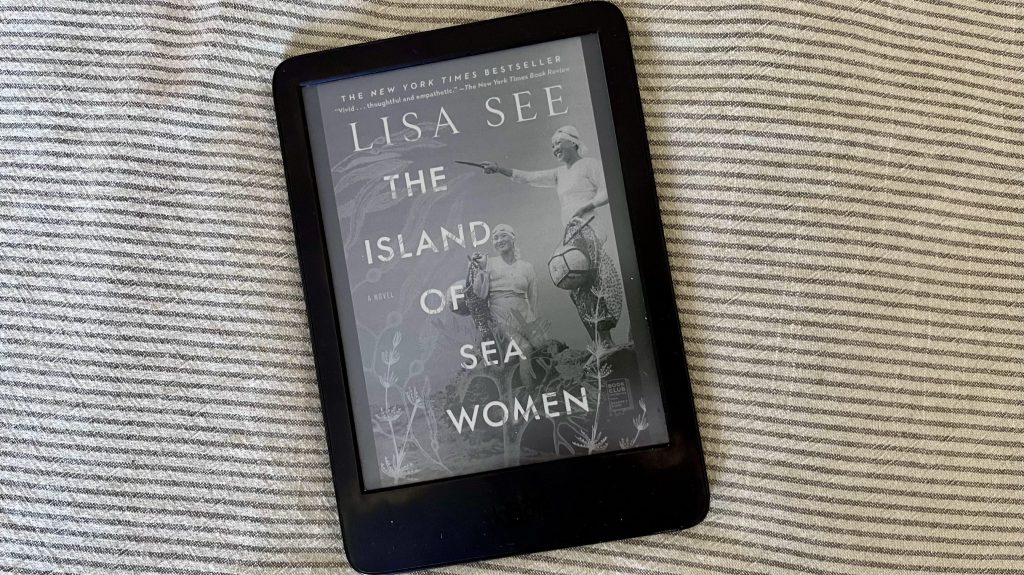
    The Island of Sea Women, Lisa See

    An amazing read. This is my favorite type of historical fiction – a book where I get to immerse myself in characters’ lives and the plot, while also learning about a specific time and place in history in a way that provides broader context. (Am I describing all historical fiction? Maybe. But this story was particularly great.)

    The book is set primarily on Jeju Island in South Korea, and starts in the early 1900s when Korea was a colony of Japan and subject to cultural and economic suppression by the colonial government. At the end of World War II, Korea was partitioned between the Soviets and the Americans, and the Americans installed an aggressive far-right (anti-Communist) government in South Korea. The new government was a brutal presence on Jeju Island and killed tens of thousands of people – likely supported by the Americans – during what is referred to as the 4.3 Incident.

    The main characters are two women who are haenyeo – a group of women-only free divers who harvest shellfish, octopus, and other sea life off the coast of the island. The haenyeo are extremely cool: they train from childhood to dive deep underwater, with no diving gear, and they are the main economic providers for their families. They live through colonialism, the war, and beyond.

    I think the book is fundamentally exploring the deep love between these two women who are best friends, even if they are separated for much of their lives. I also really enjoyed their deep connection to the ocean.

  • North Woods, Daniel Mason

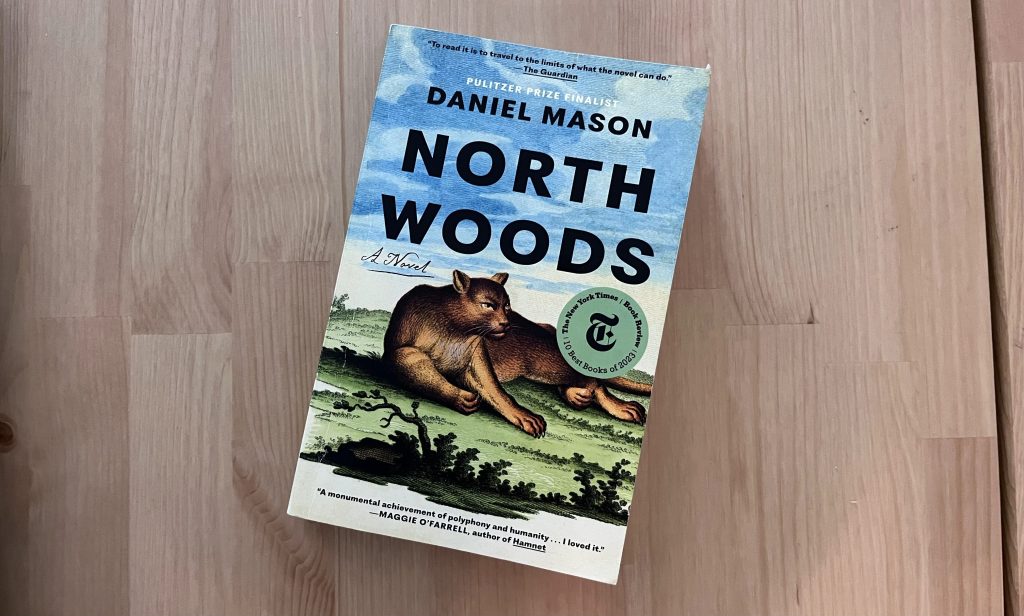
    North Woods, Daniel Mason

    What a book! Delightful, beautiful, heartbreaking. I loved the balance of beautiful writing about nature with the stories of the people who made the woods their home. The stories had a cyclical nature, where different characters and plot lines looped back on themselves and you could see connections across the generations.

    My favorites included Osgood, the apple enthusiast who planted an orchard but couldn’t escape the Revolutionary War:

    Concerning My Decision to Go to War (or, a Lamentation on the Brevity of the Life of Man Compared to That of His Trees)

    if one finds no mention of Politics in these pages, no Acts, no Dates and Declarations, it is because this is a History of Trees, not Men. That is, it was. But now the pitch has risen so that even deep within my woods I hear it.

    And Nora, a modern-day grad student who loves the ecology of the forest:

    She felt as if she had fallen in love with someone only to learn that they were dying. She could recall the winter day in the forest outside the library at Amherst when she first began to sense the possibility of an enchantment. And a decade had passed, and every day she’d felt the wonder grow deeper, and every day, reading the journals, attending conferences, she found herself confronted by the mounting evidence that she was losing the very thing that had saved her.

    she realized she had never really grasped how astonishing these forests were.

    Truly a wonderful book.

  • Moscow X, David McCloskey

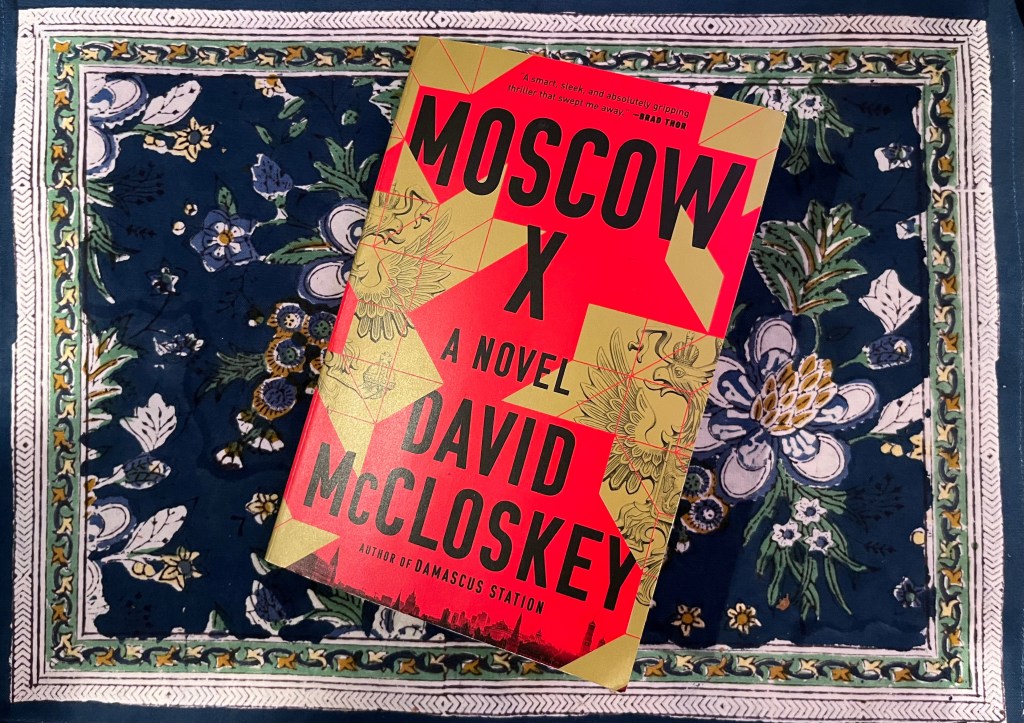
    Moscow X, David McCloskey

    This was an enjoyable, fast-paced spy novel. Interesting geopolitical dynamics, particularly regarding Russian upper-crust society in the face of Putin’s invasion of Ukraine. My favorite part: lots of interesting women! Most of the primary characters were women – Sia, Artemis, Anya – and they were each dynamic and complex characters (and their complexities were not rooted in their relationships to men). Anya, the Russian, was particularly interesting. What she really wanted, more than love or money or professional success, was to win, to defeat her enemies. I loved that energy (very relatable, ha). There is a purity to it, which lends itself to extremism, but when you consider that she is surrounded by a society of Russian oligarchs and FSB who are deeply corrupt and focused on skimming funds for their own bank accounts, her idealism and focus was an appealing alternative. Also, I enjoyed that Sia’s cover job was being a corporate lawyer at a fancy London firm – though, it seemed very unrealistic that she could maintain that intensive pace of work as a cover while also continuing to do spy stuff.

    Ultimately, this book is very entertaining: CIA agents, global travel, high-tech gadgets, a concealed lipstick gun! It is an absorbing modern story, and a relatively quick read.

  • Oil! , Upton Sinclair

    Oil! , Upton Sinclair

    Oil! was published in 1927. It’s a novel about a family in the oil industry in California, and about themes of capitalism v. socialism v. communism. The story explores how capitalism can pinch the poor as they work long hours and struggle to get by, while a small group of ultrawealthy people control industry and government. I enjoyed the exploration of these themes through fictional characters. Bunny, the main character, is the son of an oilman who started off as a working man and rose to become the head of his own ever-growing oil company.

    Bunny’s dad (J. Arnold Ross Sr.) is very salt of the earth and likable for the first part of the book – he is clearly a hard worker and he wants to teach his son to be the same, to really understand how to take responsibility for himself and the business. I felt disappointed in Bunny’s dad later in the book though, he seemed to fade quickly as a character and just became subsumed by what other big business owners wanted (to pursue government corruption, etc.). I think my disappointment in Ross Sr. can be attributed to the overall nature of the book — the characters are used as caricatures of a type of person, and Ross Sr. seems to represent the type of person who “makes it”, crossing over from working poor to rich and abandoning his fellow workers in the process.

    I like being able to relate to and root for a character, and to me Bunny was relatable. He is a caring young person who wants to make the world a better place while trying to navigate his own place in society. In particular, it was interesting to see how Sinclair portrayed Bunny’s relationships with rich and powerful individuals, ranging from more shallow characters (fellow college students, movie stars) to the titans of industry who are shaping government. Bunny was admirably dissatisfied with just accepting wealth and a life of ease – he wanted to think about how the system works and be a part of changing it for the better.

    Random thoughts:

    • The women characters felt stronger at certain points in the book, but by the end I felt frustrated that all of their actions and thoughts seemed to be described in terms of how they related to a man – Bunny. Maybe that’s just because he was the main character. But also many of the women characters were quite shallow — they were happy to be rich and enjoy life, and were disinterested in making the world better for others. And the women who were more interesting – Rachel and Ruth – were both Bunny’s romantic interests.
    • I felt like the dynamic between Bunny and Paul always felt strained to me. Paul seemed weirdly paternalistic towards Bunny even though he wasn’t that much older.